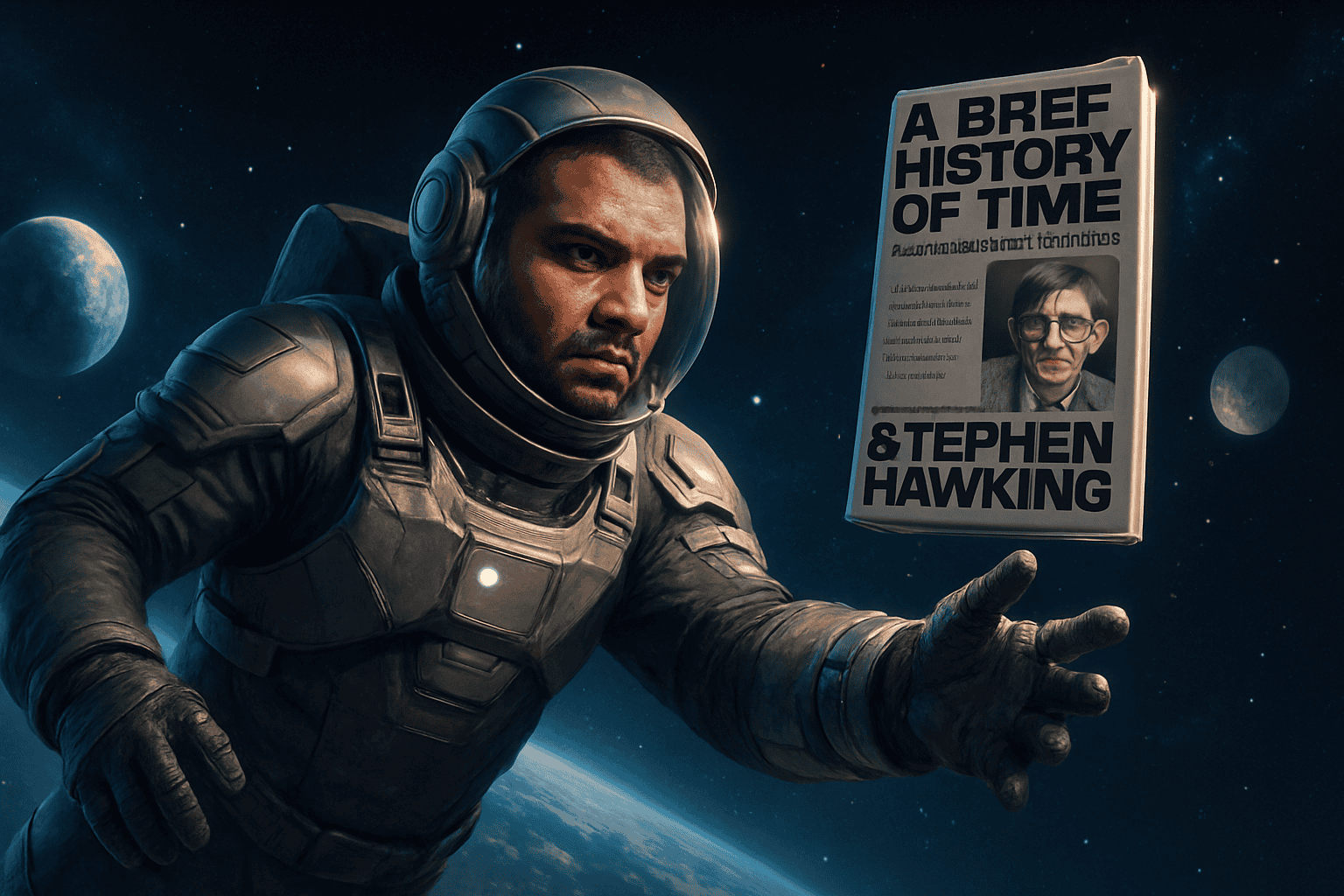
Hey everyone! I’m Ruksar, a tech enthusiast and creative explorer who loves turning ideas into real things—whether it’s through code, design, or storytelling. This book you’re seeing floating in space? It’s not just a book—it’s a symbol of everything I love: curiosity, learning, and thinking beyond limits. It connects perfectly with my journey in tech, design, and problem-solving, always reaching for something new. Buckle up as we explore this together in a fun, creative way—just like catching a book in zero gravity!

The Ancient Model of Space: Simple Explanation
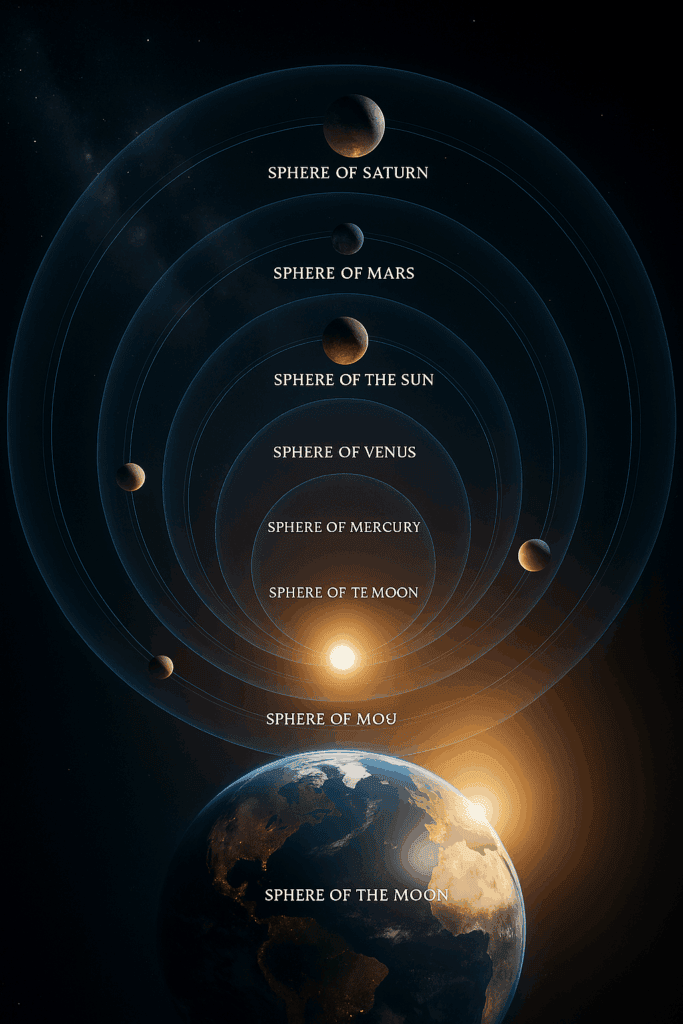
Long ago, people imagined space as a set of invisible spheres or shells around Earth. Each sphere carried a planet or the Moon, all circling our world one outside the other.The Moon’s sphere was closest, moving around Earth.•Next came Mercury, Venus, the Sun, Mars, Jupiter, and Saturn—each in its own shell, farther out.•People thought everything in the sky traveled in perfect circles, set by these spheres.Today, we know this isn’t true. The Sun is at the center, and Earth is just one planet moving around it. Planets don’t sit on shells—they travel in big, looping orbits through empty space.But this old idea helps us see how people tried to make sense of the universe before telescopes or computers existed. It’s like guessing the rules of a game by watching from outside, using your imagination and simple tools. Their picture wasn’t right, but it was clever and showed how human curiosity pushes us to explore and learn.
The Light Cone: Simple Space-Time Explanation
⁷
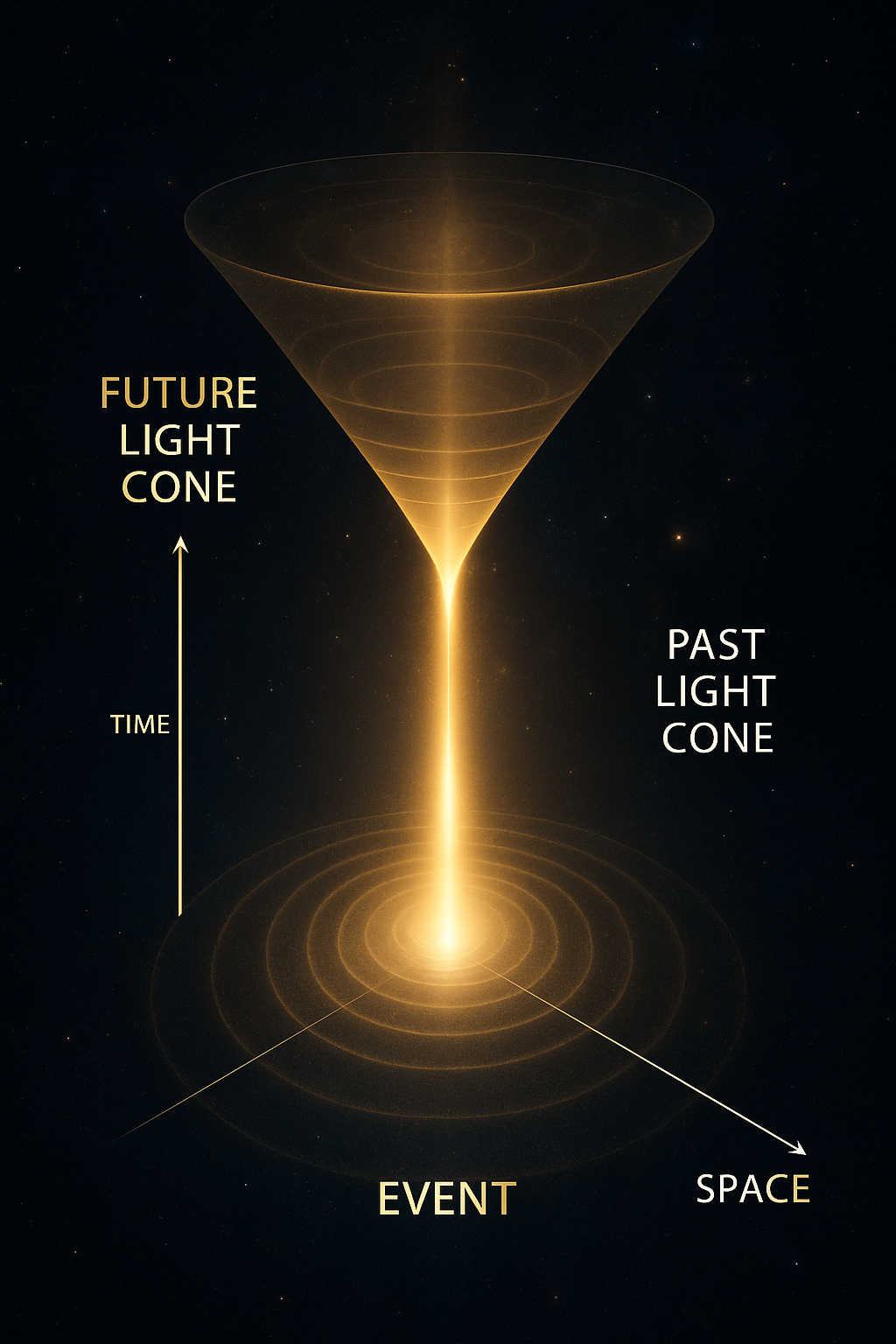
Take a look at this awesome image! It shows something called a light cone. Let’s break it down in easy words, just like before:What’s a Light Cone?Imagine you’re standing in the middle of a huge, dark space. If you turn on a flashlight, the light spreads out really fast. The cone shape on the picture is like the path light takes from a single event—right where you are!The bottom part (“past light cone”) is all the light that reached you up until now, coming from everywhere in space.•The top part (“future light cone”) is where your light can go next. It spreads out further and further, like ripples from a splash in water.•How Does This Relate to Space and Time?Think of the vertical line as time. As time goes on, the light moves farther and the cone gets wider.Time goes up in the picture.•Space goes out sideways.•If you move away from the center, you’re going into the future.Imagine It With TechnologyIf you’ve ever seen WiFi waves spreading from a router, or watched animation of ripples in a pond, it’s similar. Every event in space can send out signals or light, reaching only certain places over time.The cone is like the signal range—only things inside the cone can “meet” or “talk” later on.•Why Is This Cool?It teaches us that not everything in space can reach everything else right away. There’s a limit: the speed of light. It also means our actions can only affect certain places in the future, like sending out signals in a game or from a phone.So, just like spheres and orbits helped ancient people imagine the universe, today scientists use light cones to understand how events connect in space and time. The universe is a lot like a giant tech network—with signals, limits, and possibilities!
What Is a Light Cone?
Imagine you’re in the middle of space, holding the brightest flashlight ever! When you switch it on, the light zooms out from you in every direction, making a cone shape. That cone is called a light cone.The bottom part shows all the light that came to you from the past.•The top part is where your light is going, spreading out into the future.•If someone or something is inside your cone, you can “see” or “chat” with them—just like playing tag and only tagging friends close to you!•But here’s the super cool part: nothing can move faster than your light! Outside the cone, it’s like a game boundary. You can’t reach places beyond it, no matter how fast you run or shout.So, every time you shine your light or send a message, imagine your own light cone stretching through space-time, drawing a magical area where adventures happen!Space is full of cones, signals, and possibilities—just waiting for you to explore!
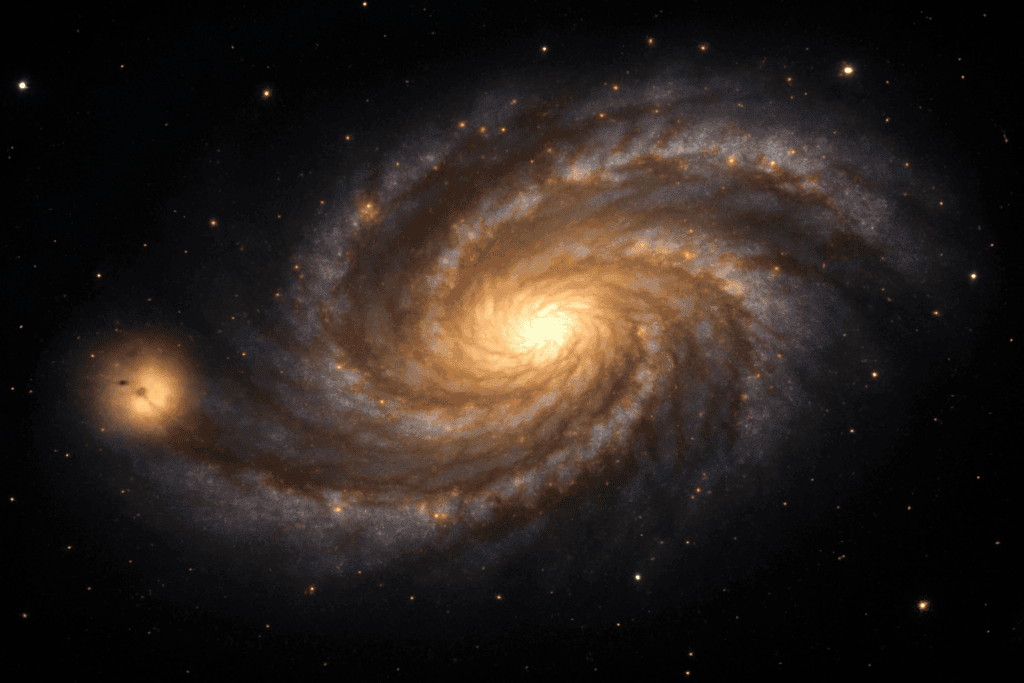
Our Amazing Galaxy — Simple Explanation
Look at this awesome galaxy picture! A galaxy is a HUGE family of stars, swirling together in space. The one you see has spiral arms that look like twirly noodles, spinning slowly around its center.Our own Sun is just one ordinary star, tucked away near the edge of a spiral arm—not the center!•Galaxies are super big: this one is about 100,000 light-years across. That means even light, which travels super fast, takes 100,000 years to zoom from one side to the other!•We used to think Earth was the center of everything, but now we know it’s just one tiny part of a gigantic galaxy. All the stars you see in the night sky are really far away—so far, they just look like little dots!You can’t see what shape stars are, or how big they are, just by looking. But you can see their color—and scientists use that to learn about different kinds of stars.Space is huge and full of wonders. This galaxy picture shows just how much more there is to discover!
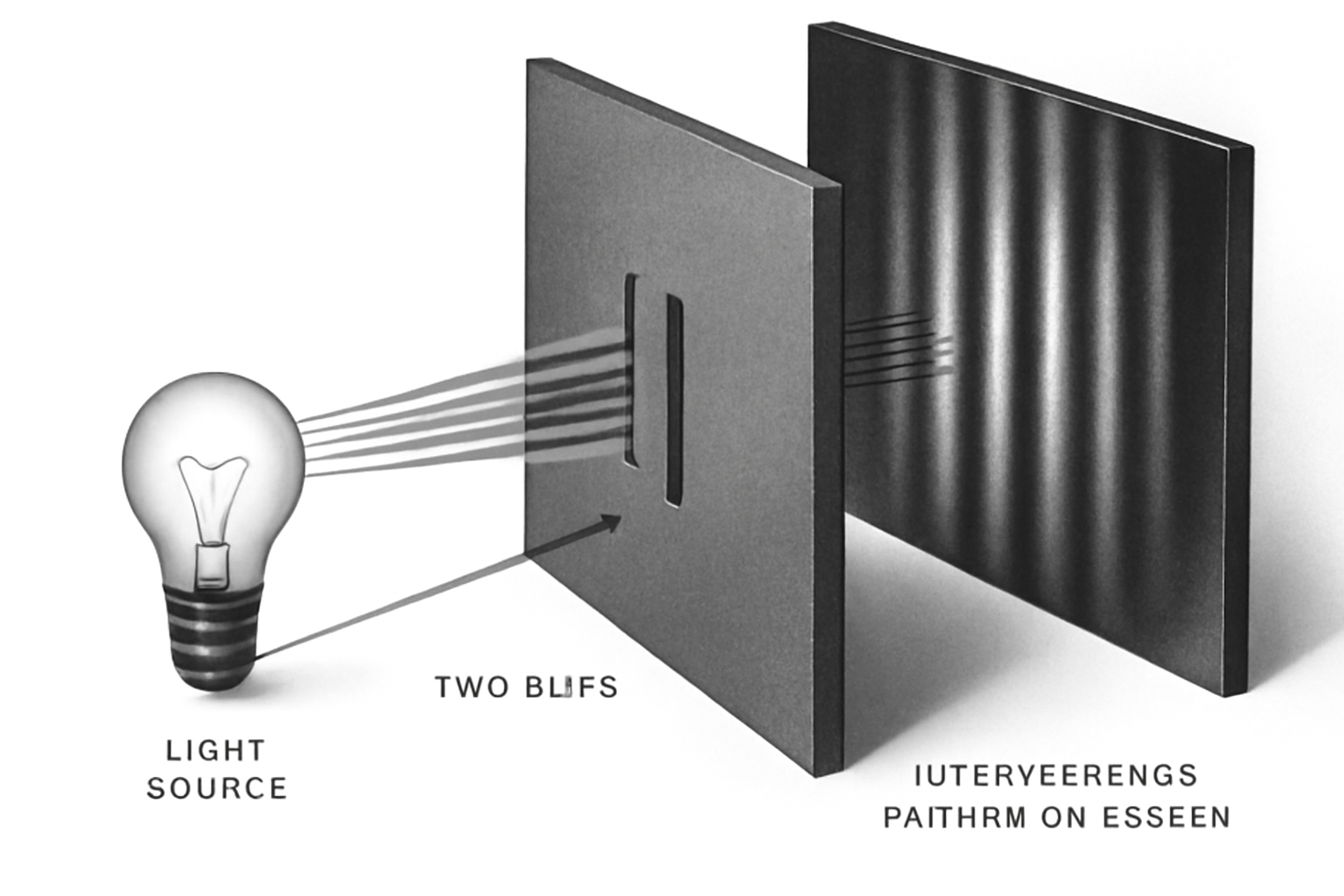
The Double-Slit Adventure
Imagine you’re in a super cool science lab! You shine a light at a wall, but this wall has two tiny openings—we call them slits.The light squeezes through both slits at once.•On the other side, a screen shows the results.•Here’s the magic part: Instead of just two bright lines on the screen, you see a bunch of stripes, like a zebra! That happens because the light acts like a wave, and the waves from each slit mix together, making patterns—just like ripples in a pond.It’s like throwing two stones into water and watching how the waves overlap and dance. This experiment shows that light can be tricky—sometimes behaving like wiggly waves, not just straight beams.Science is full of surprises, and sometimes, things are not what they seem… Just like in fun games or magic tricks!
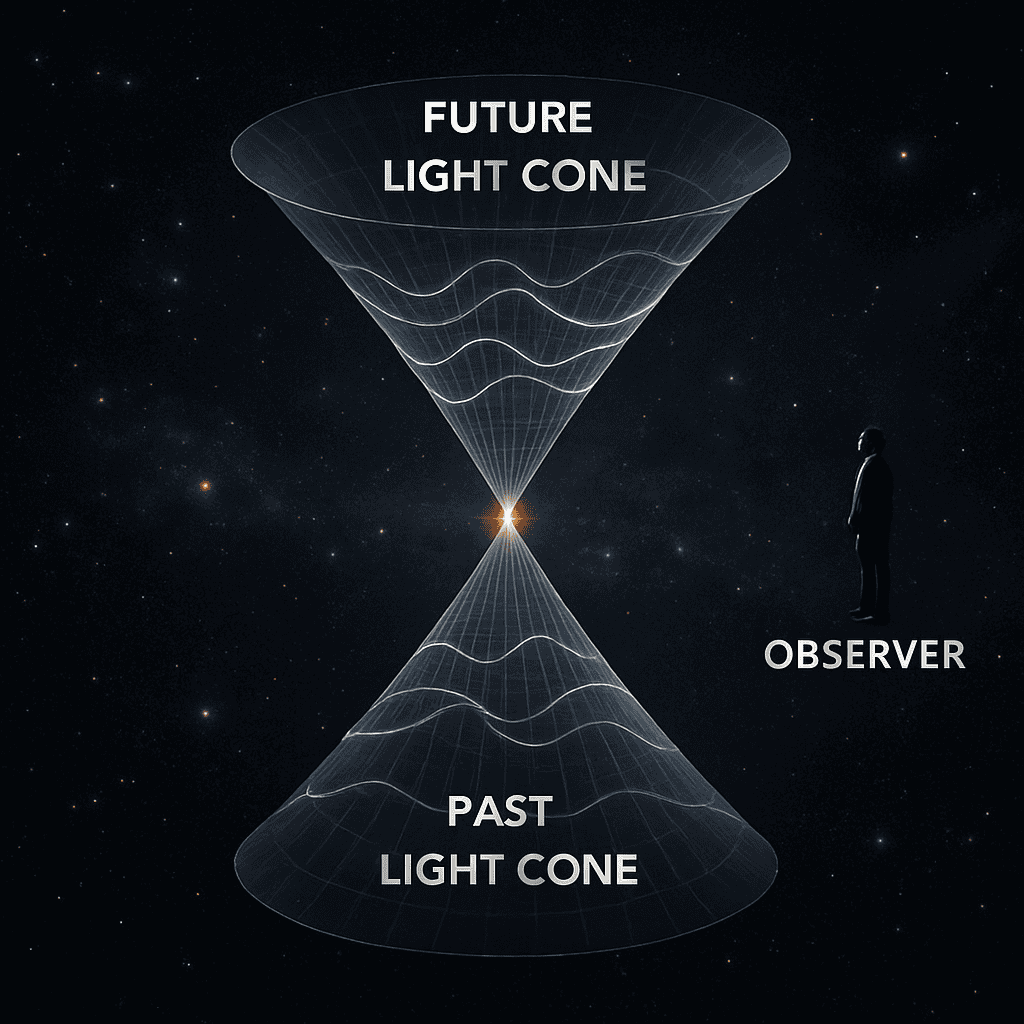
The Future Light Cone
Imagine you’re the superhero of time and space, standing in the middle of the picture! The future light cone shows all the places your light, actions, or messages can go as time moves forward.When you shine a light or send a message, it races out in every direction.•The cone shape is like your “superpower reach”—whatever is inside the cone could see your light in the future.•If a friend is inside your future light cone, maybe on another planet or spaceship, you could wave or send a message, and eventually, they’ll see it! But if they’re outside the cone, no matter how hard you try, your light can’t reach them—just like a video game boundary that you can’t cross.So, your future light cone shows how far you can make a difference as time goes on. It’s the space you can explore, connect, or send signals—making you a space-time explorer every time you turn on your light!Space is full of amazing paths, and your light cone is your personal adventure map in the universe!
What Happens When Protons and Antiprotons Collide?
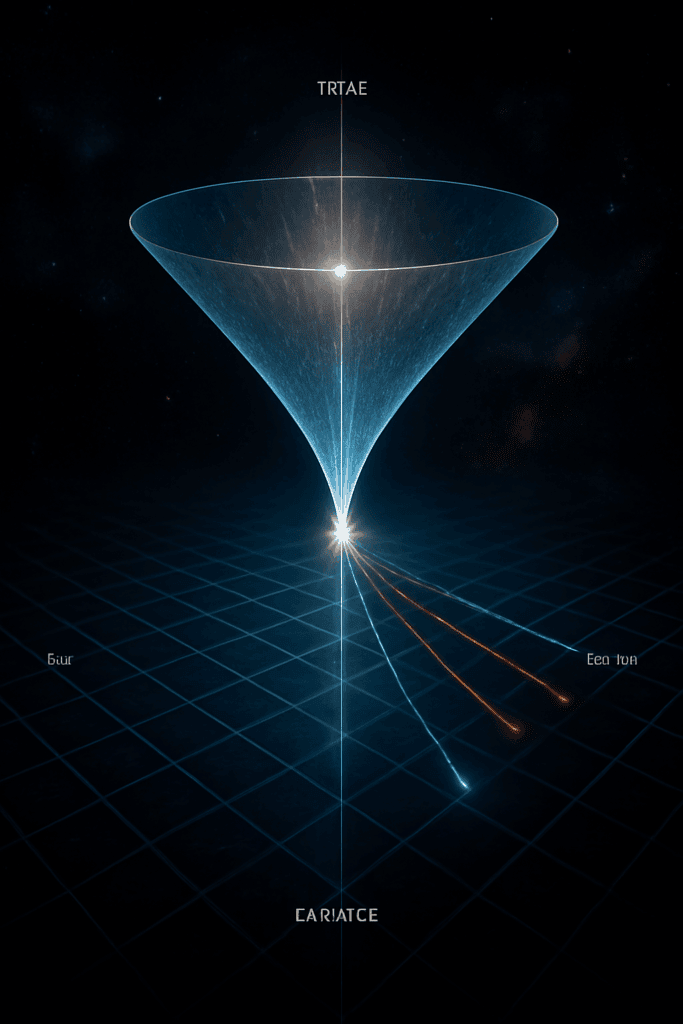
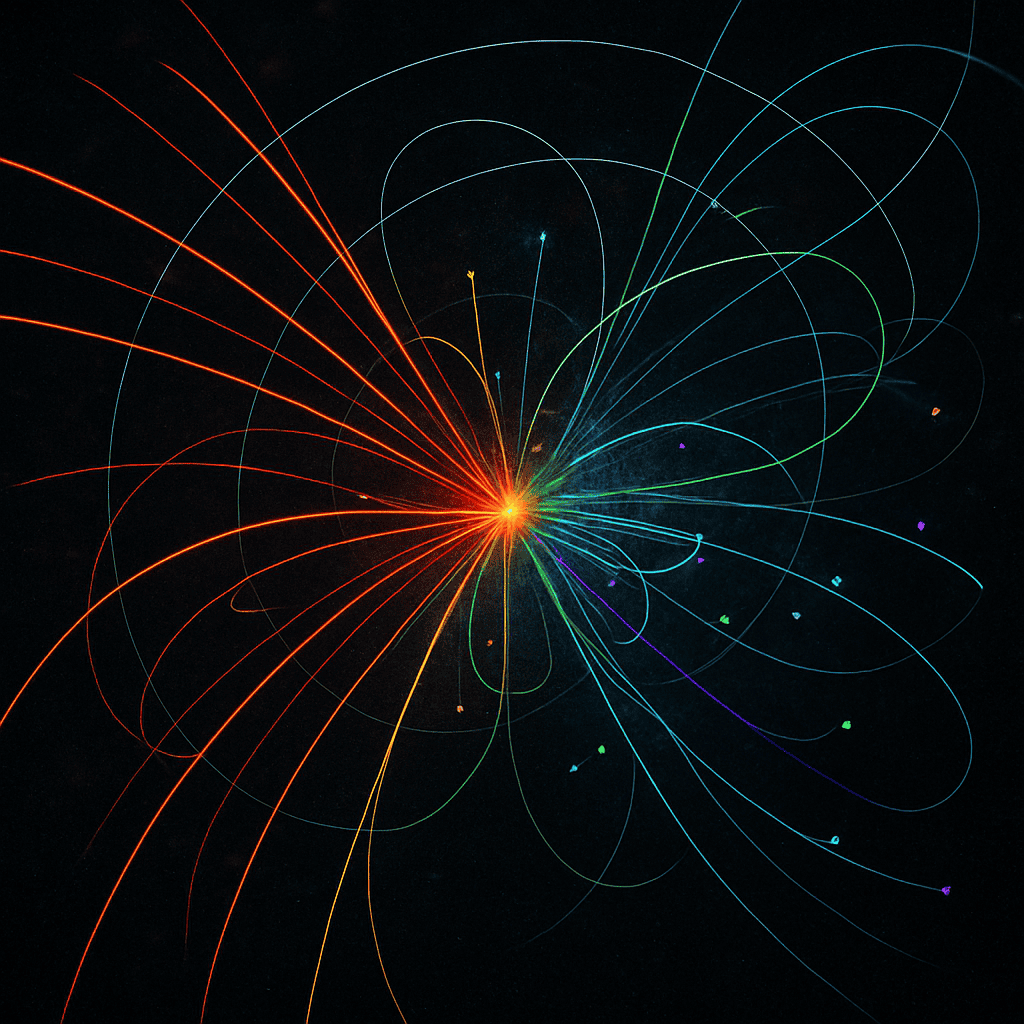
Imagine two tiny, super-fast cars zooming toward each other—one is a proton and the other is an antiproton. When they crash, it’s not just a regular wreck. Instead, they smash apart and release even tinier pieces called quarks and gluons.In normal life, quarks and gluons are always trapped inside bigger particles, held together by the powerful strong nuclear force—think of the way magnets stick together.But in a high-energy collision, like the one in the picture, that force gets weak for a split second.The result? Quarks and gluons shoot out almost “free,” leaving trails that scientists can see as curved lines.It’s like watching the gears and springs fly out of two clocks that crash into each other—suddenly you see all the secret parts inside!This collision helps scientists study what the building blocks of matter look like and how they behave, teaching us more about the amazing world inside every atom.
How a Black Hole Forms
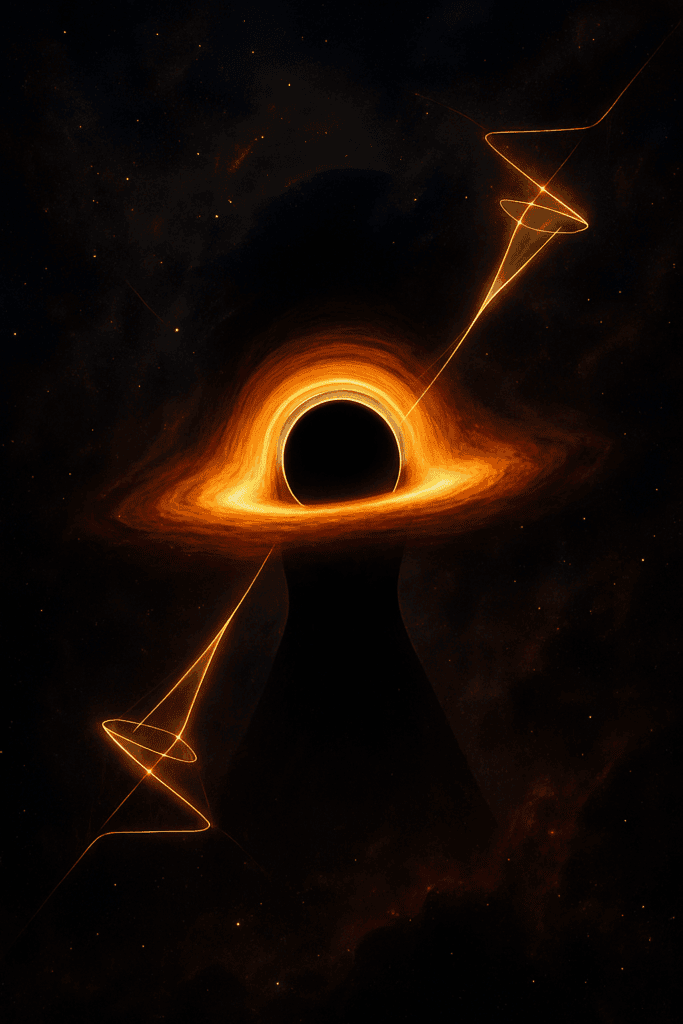
Imagine a giant star is shrinking, getting smaller and smaller. As it shrinks, its gravity gets stronger and stronger.Normally, light can escape from a star. But as the star gets tiny, its gravity bends the paths that light can take, making it harder for light to get away.When the star reaches a certain small size, not even light can escape anymore. This point is called the event horizon—it’s like a one-way door, where anything that goes in can never come out.Inside the event horizon is what we call a black hole. Even light gets trapped, so the star disappears from view!The diagram shows how light rays behave before and after the event horizon forms. Once the star creates a black hole, all paths lead inward, and everything—even light—is caught by gravity. The very center is called a singularity, where gravity is at its strongest.
Cygnus X-1: A Star and Its Hidden Partner
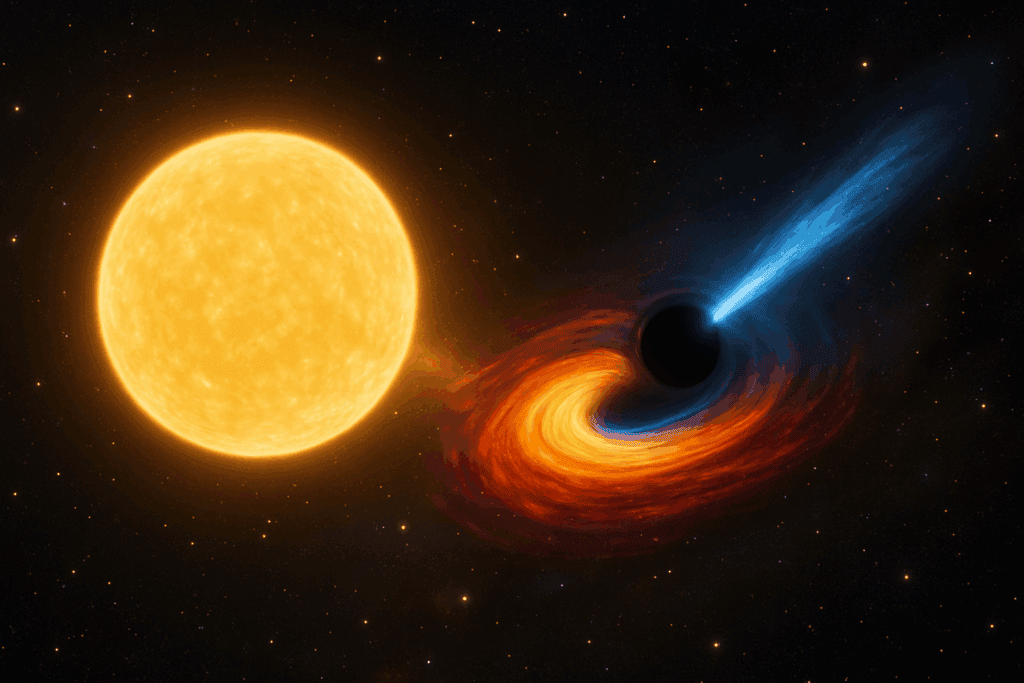
Near the center of the image, you see a bright spot—that’s a star in the Cygnus X-1 system. But it’s not alone! It orbits around something mysterious: a black hole.What’s happening? The star and the black hole circle each other, held together by gravity.You only see the visible star, but the black hole is there, pulling matter from the star like a powerful vacuum.As the star’s matter falls toward the black hole, it spirals in, getting super hot and bursting out X-rays.Scientists spot Cygnus X-1 by its strong X-ray signals. That’s how we know it’s not just a star—it’s a star paired with a black hole, locked in a cosmic dance!
Black Hole Event Horizon
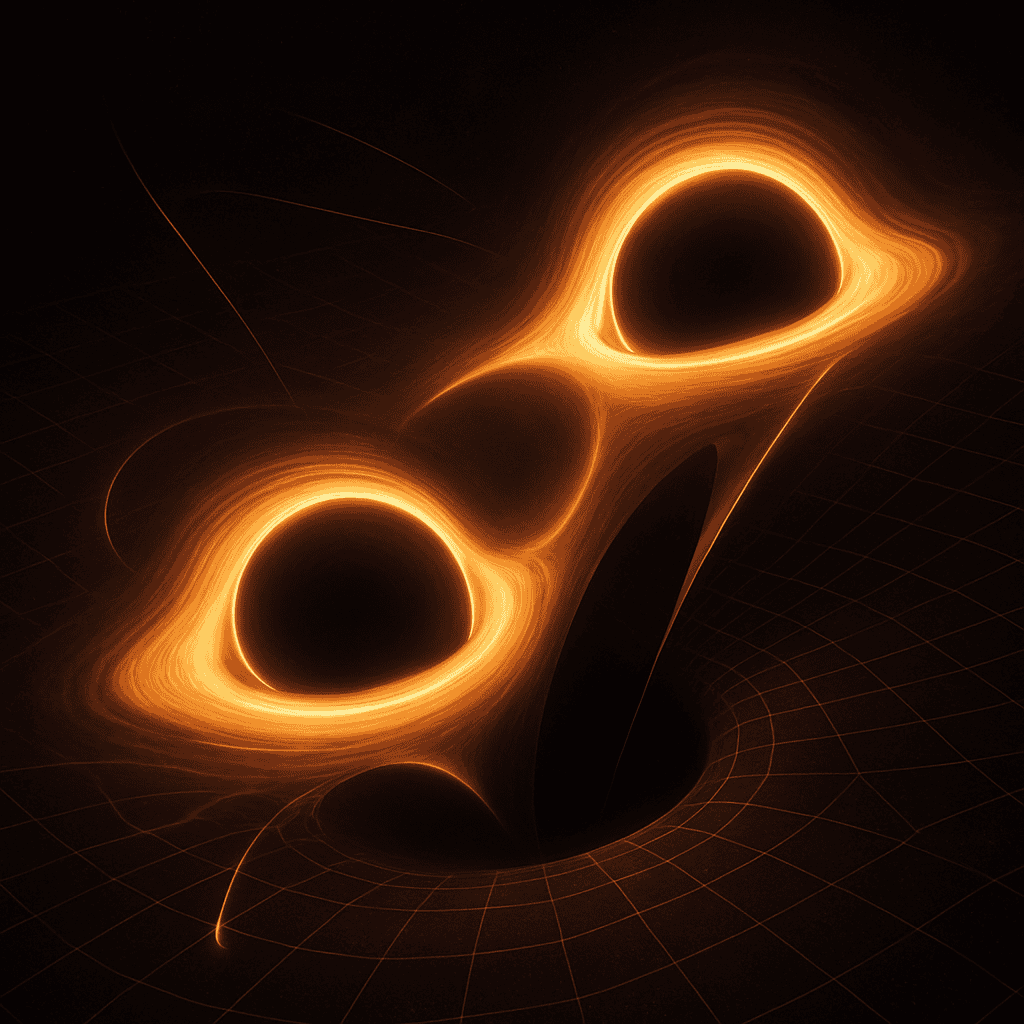
Imagine a black hole as a dark sphere where gravity is super strong. The edge of this sphere is called the event horizon. If light tries to escape from inside, it gets pulled back and can’t get out—just like a bug caught in a sticky trap!Light rays near the boundary bend and curve, creating a shadowy border. If two black holes join together, their boundaries merge, and the new event horizon becomes even bigger. The event horizon never gets smaller, it only stays the same or grows as more things fall in.So, the event horizon marks the point where no light or anything can escape—a true cosmic one-way door!
Hawking Radiation
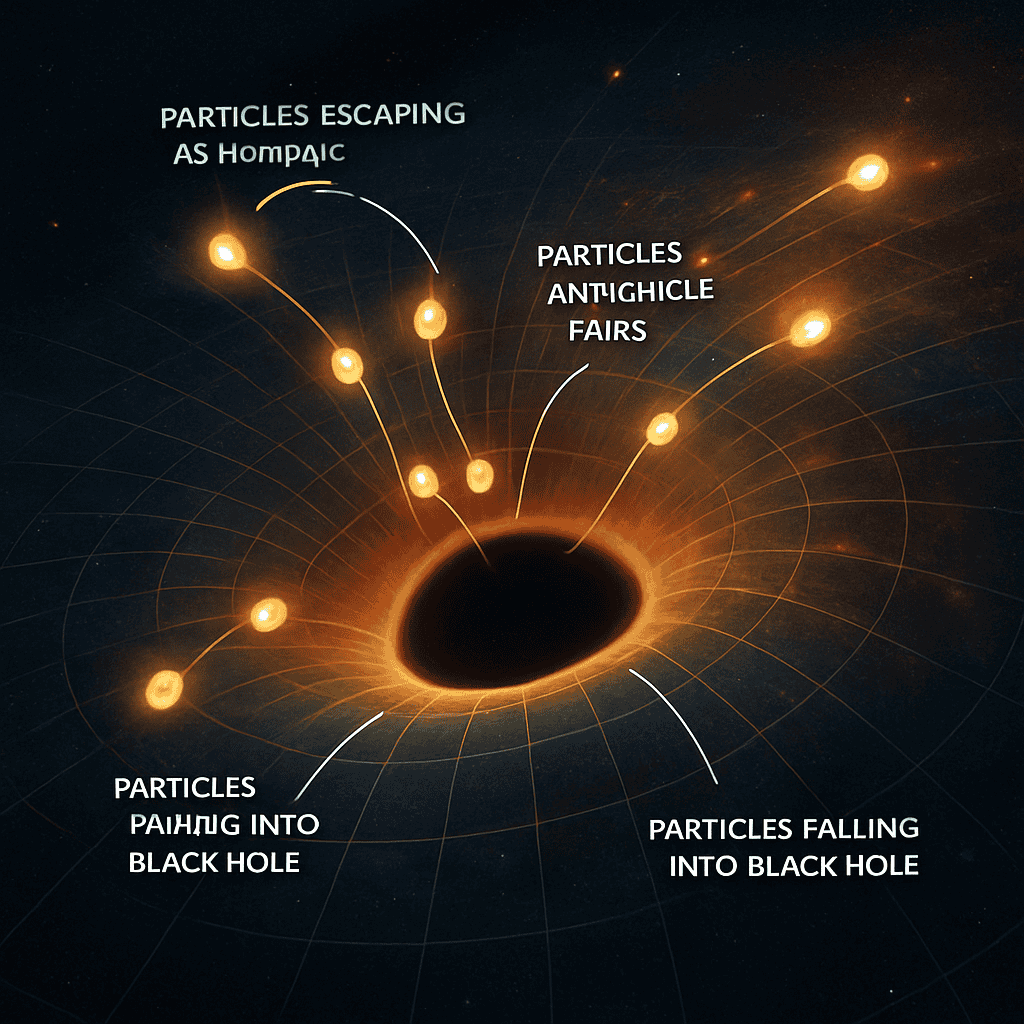
Near a black hole’s edge (the event horizon), tiny pairs of particles pop into existence: one is a particle, the other is its opposite, called an antiparticle.Sometimes, one particle falls into the black hole, while the other escapes into space.The escaping particle becomes real and can be detected, which makes it look like the black hole is giving off energy.Over a long time, this process slowly makes the black hole lose energy and shrink.So, black holes aren’t completely black—they can slowly “evaporate” by letting particles escape, thanks to this strange quantum effect called Hawking radiation!
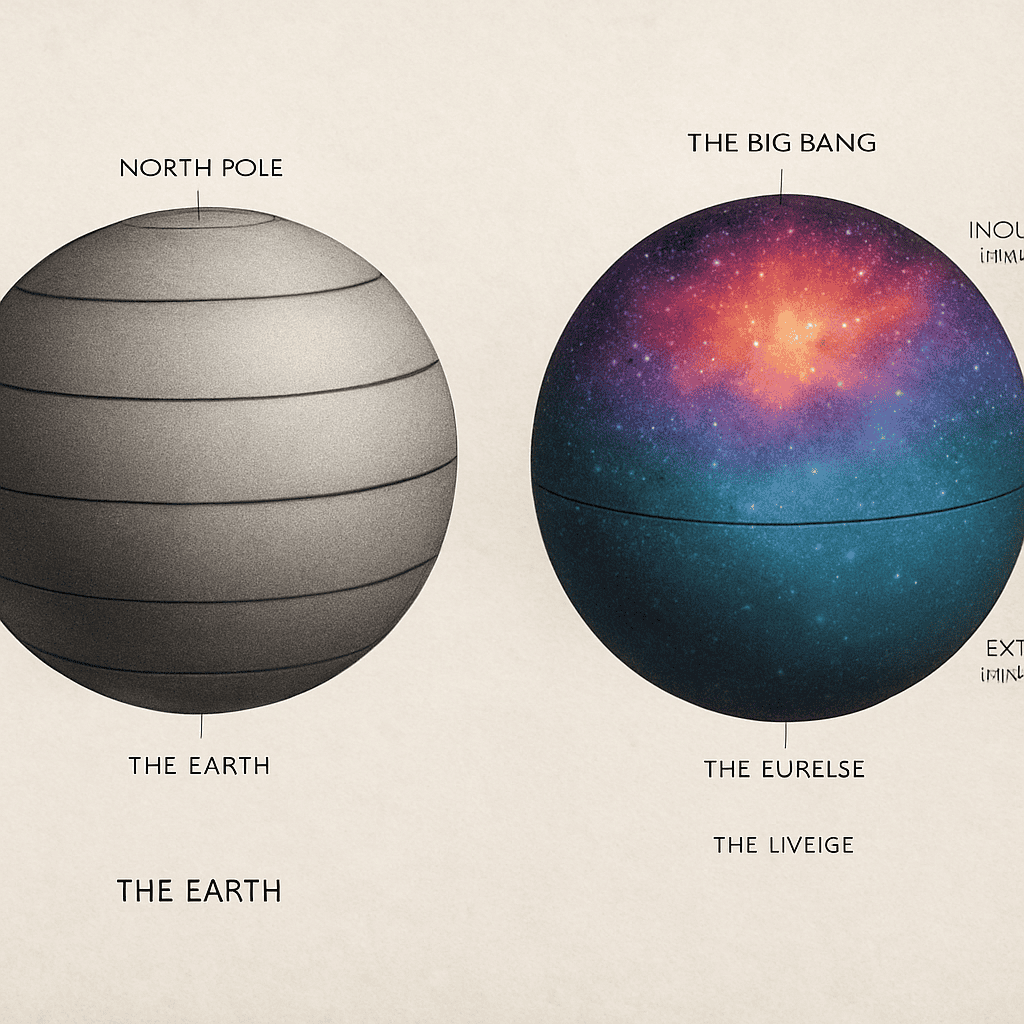
No Boundary Proposal
This idea compares the history of the universe to the surface of a sphere, kind of like Earth.Just as the North Pole is a starting point with no edge on Earth, the universe can begin (at the “Big Bang”) without a sharp boundary.As you move away from the North Pole, circles get larger — this is like time increasing and the universe getting bigger.Eventually, you reach a maximum size, then the circles shrink again, like the universe might contract in a “Big Crunch.”So, the universe doesn’t need a beginning or end with a sharp edge. It’s smooth and rounded in imaginary time, just like the surface of a sphere!
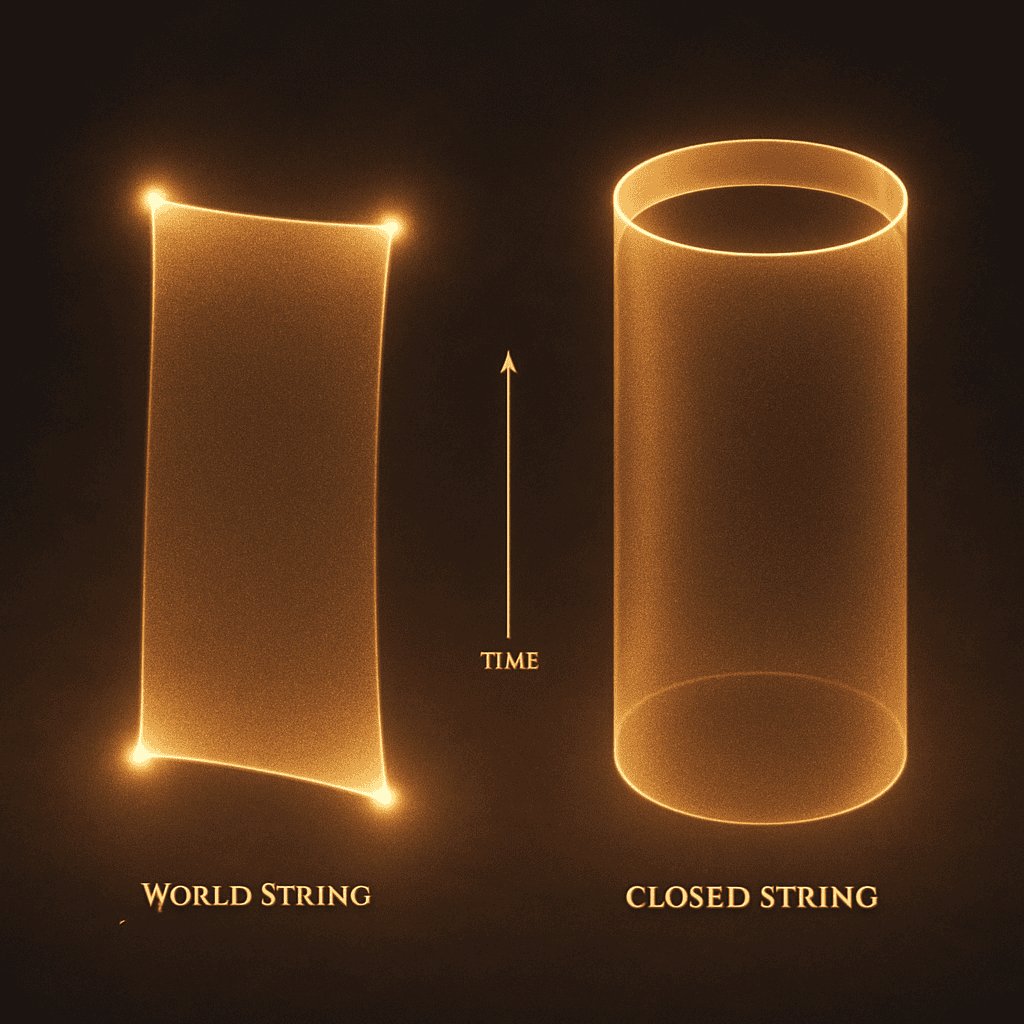
Open and Closed Strings
In string theory, tiny strings can be open (like a piece of spaghetti) or closed (like a loop). As time passes, an open string traces out a flat strip, while a closed string makes a tube shape.Open string: Ends move through space and time, drawing a strip (the worldsheet).Closed string: The loop moves, making a tube (the worldsheet).These shapes help scientists picture how strings travel and interact in the universe!
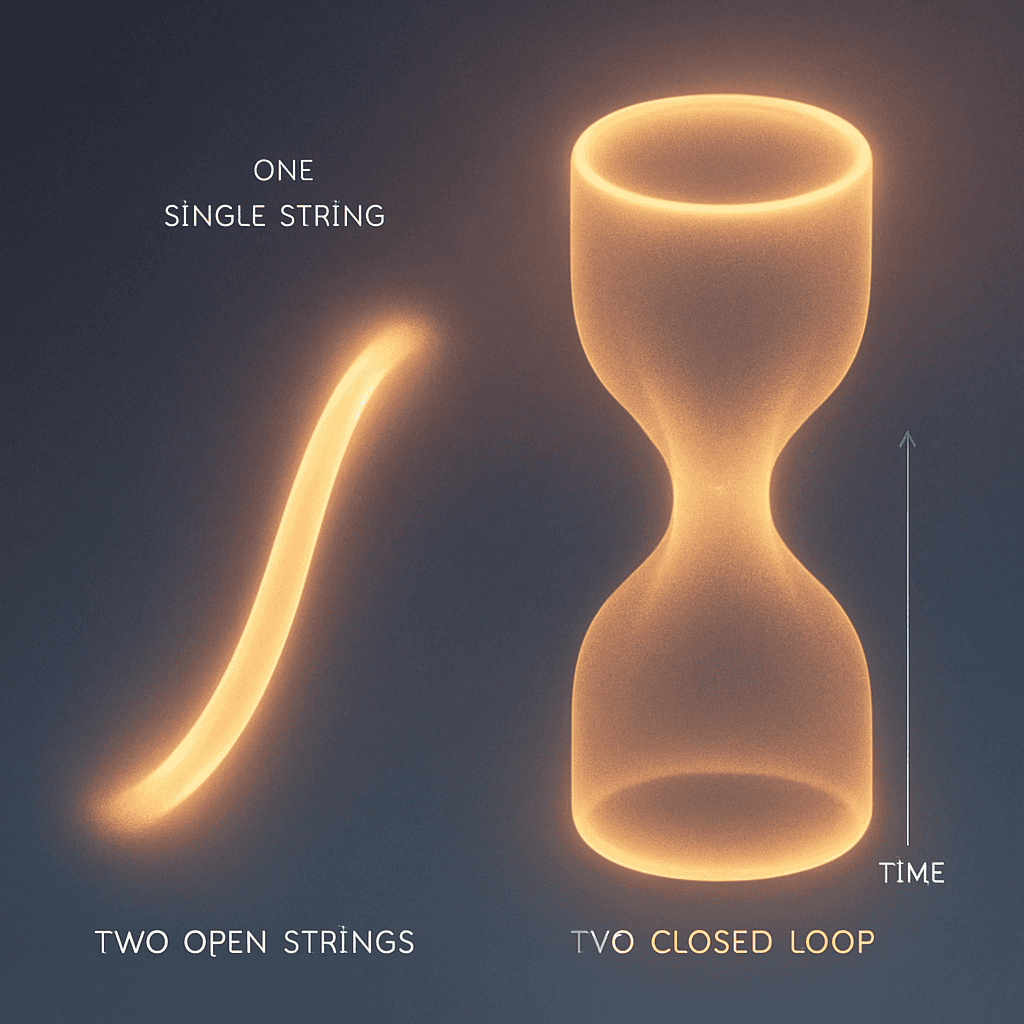
How Strings Combine and Split
How Strings Combine and Split — Simple Explanation In string theory, strings can join together or break apart, like pieces of string in real life.When two open strings touch at their ends, they form one longer string.When two closed strings (loops) join, they create a bigger loop, much like pant legs joining at the waist.Scientists use pictures like a strip or a tube to show how these strings change through time. This joining and splitting helps describe how particles interact in the universe!
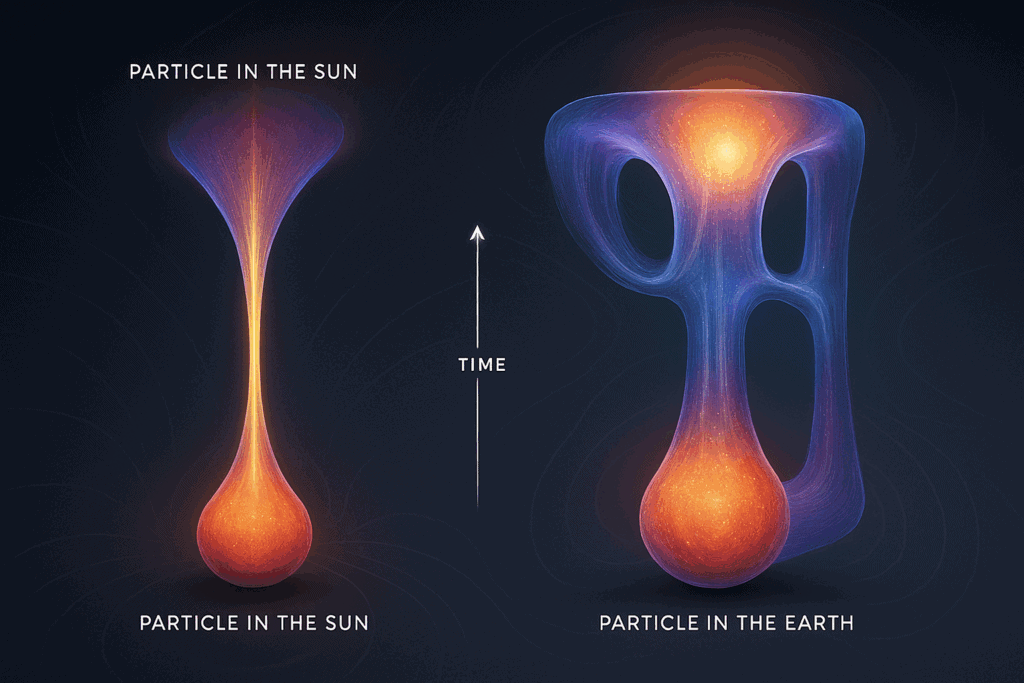
Gravitons and String Theory
String theory says that forces like gravity are carried by tiny vibrating strings called gravitons.A particle in the sun and a particle on the earth can feel gravity because a graviton connects them, just like a wiggly string between two points.Scientists picture this connection as a worldsheet that can look like a straight line or even an H-shaped tube linking both particles.This theory helps describe how gravity works at the smallest scales and suggests everything is connected by strings—even huge distances across space!
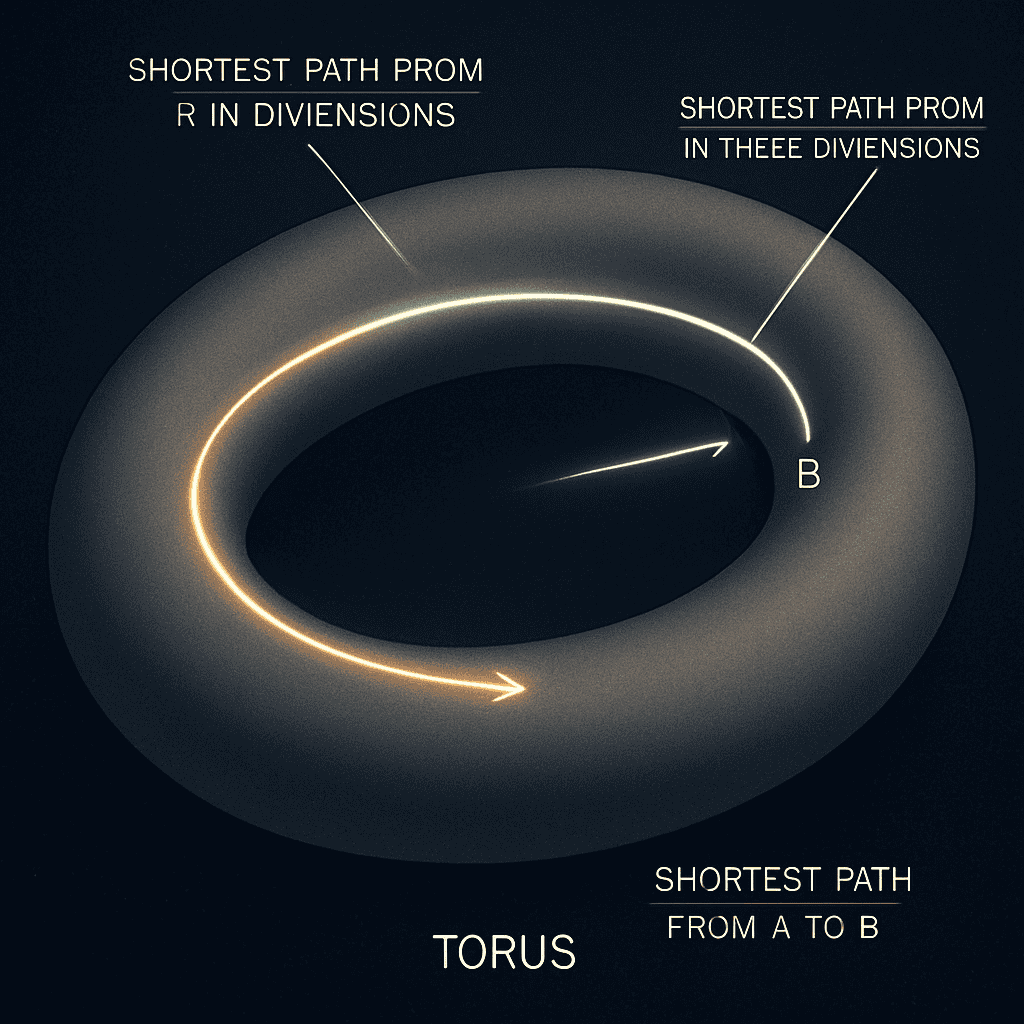
Extra Dimensions and the Torus
Imagine space as the curved surface of a donut (a torus). If you want to get from point A to B on the donut, you’d have to walk around the curve—this is the shortest path in two dimensions.But if you use a shortcut through a third dimension, you could go straight across! The idea here is that extra dimensions might exist but are curled up so tiny that we don’t notice them—just like a shortcut hidden inside the donut. That’s why we see only three big space dimensions in our everyday life!
Two-Dimensional Animal
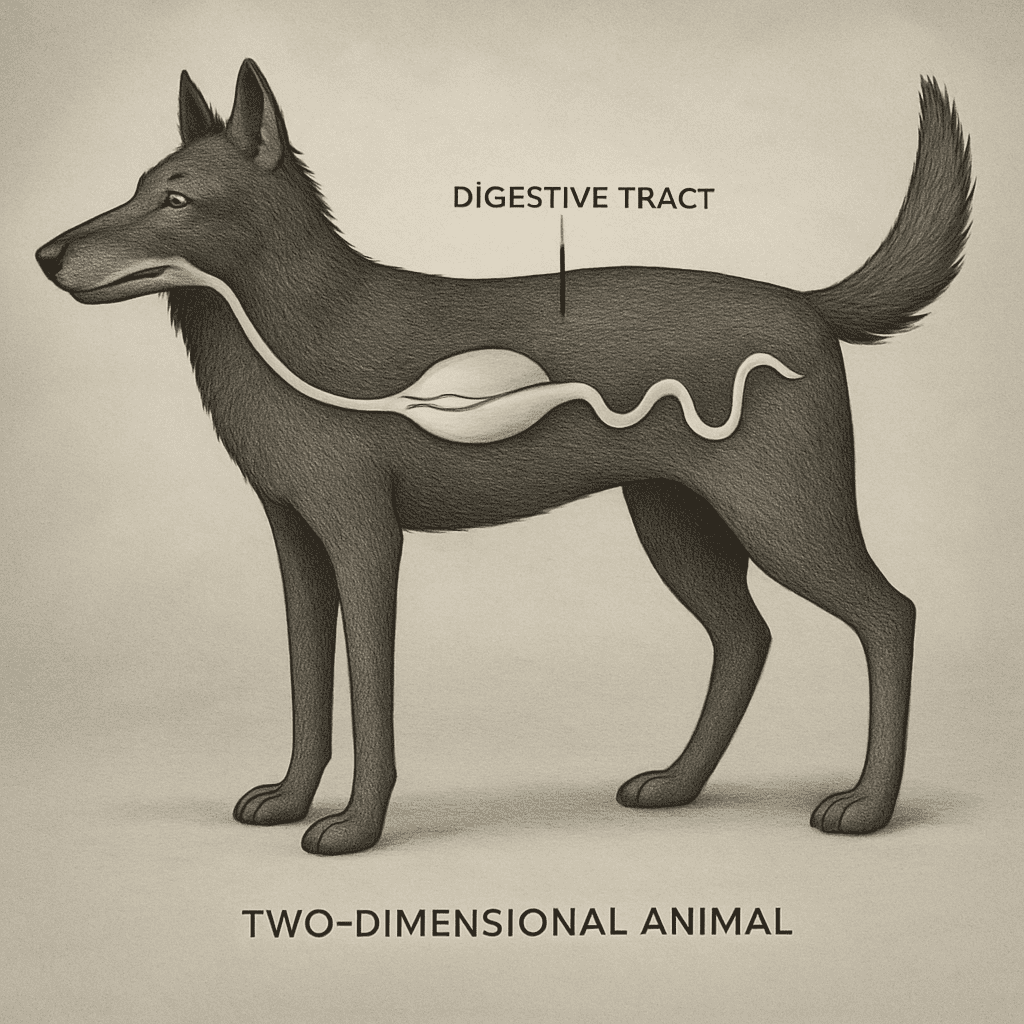
Imagine an animal that can only move in two directions—like up and down or left and right, but not in or out. Its body and even its digestive tract are completely flat, like a drawing on paper.This idea helps scientists picture what life would be like in a universe with only two dimensions. Everything would be squished and squeezed, which is very different from our three-dimensional world!